The Architecture of Fascist Italy
I am interested in how the material, architectural remains of Fascist Italy (often called ‘difficult heritage’) are understood, managed and engaged with today, both within Italy and in former Italian colonies, especially Albania.
I presented this work at the conference ‘Material Legacies of Fascism’ at the Royal Institute of the Netherlands, Rome in 2023 and at the conference ‘Built to Last: Material Legacies of Italian Colonialism’ at the Austrian Historical Institute, Rome in 2019.
Publications
I have published two articles in this area, both available open access.
‘Dealing with the material legacies of Italian Fascist colonialism in post-Communist Tirana,’ Interventions: International Journal of Postcolonial Studies 26: 7 (2024), pp. 897-917, as part of the special issue ‘Colonial Heritage in Italy, Albania, and Somalia,’ eds. Sebastian De Pretto and Markus Wurzer
This article examines the legacy of Italian Fascist architecture in Tirana, Albania, exploring how buildings constructed during the period of Italian influence and occupation (1923–1943) have been preserved, repurposed and contested since the end of Communism. Focusing particularly on debates surrounding the demolition of the National Stadium and National Theatre between 2016 and 2020, it investigates how Albania's colonial past has been mobilised in contemporary discussions about national identity, urban development and cultural heritage.
‘Monumental artworks as difficult heritage: Examining the memory of Fascist colonialism in Sicily,’ Quellen und Forschungen aus Italienischen Archiven und Bibliotheken 104 (2024), pp. 55–80, as part of the special issue ‘The Material Legacies of Italian Colonialism,’ ed. Bianca Gaudenzi
This article explores the little-examined legacy of Fascist colonial propaganda in Sicily through three monumental artworks created in Palermo, Messina and Ragusa during the 1930s. Examining their changing reception and treatment from the fall of Fascism to the present day, it considers how these artworks have been preserved, concealed, neglected or reinterpreted. The article sheds light on the complex ways in which Italian society has negotiated the material remains of Fascist colonialism, and the continuing challenges they pose for public memory and cultural heritage.
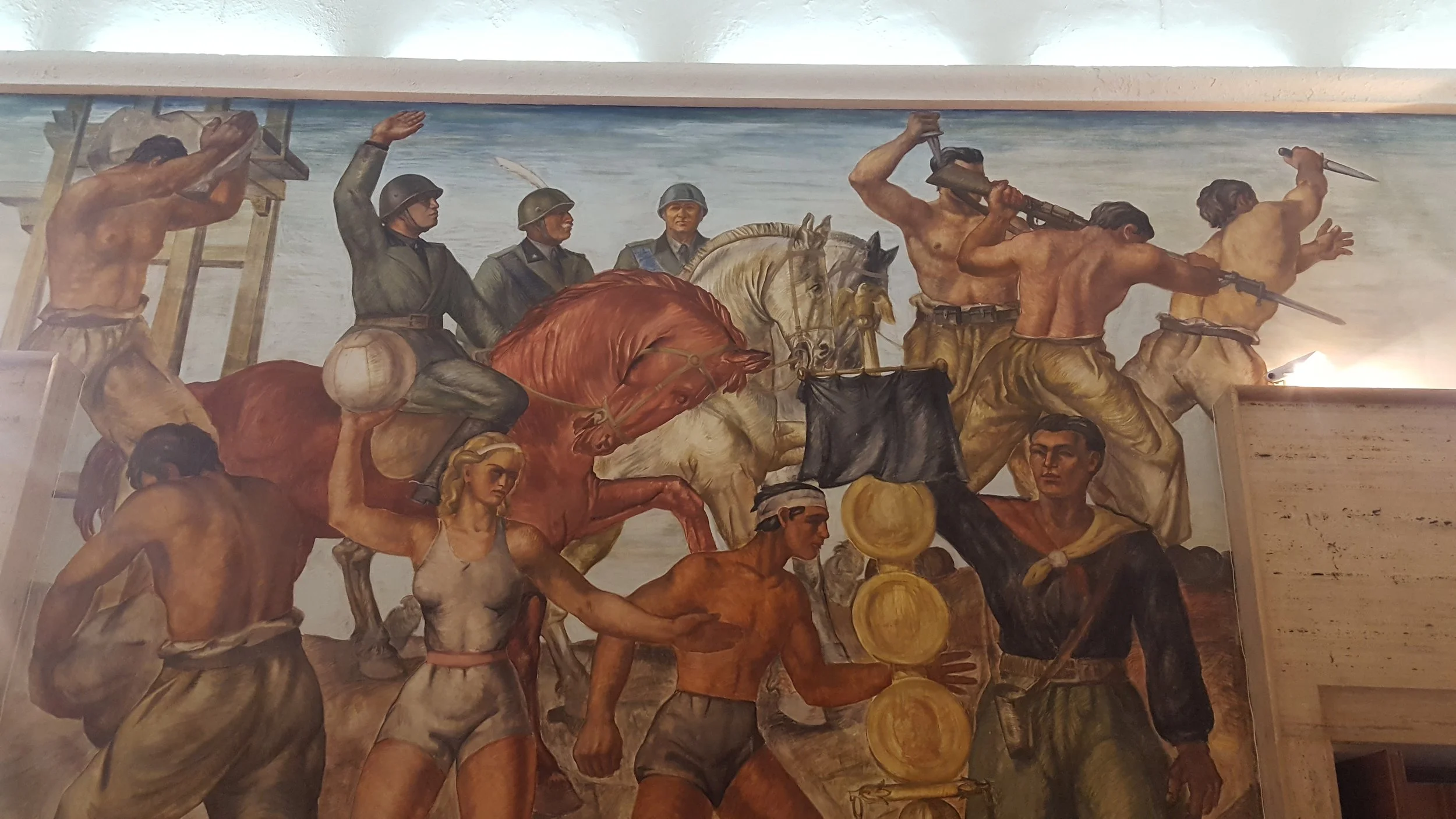
Mussolini on horseback in Ethiopia as depicted in 1937 by Eugenio (Gino) Morici and Pippo Rizzo in the ‘Sala dell’Impero’ in the Palazzo della Prefettura in Ragusa, Sicily. Photo by Selena Daly.
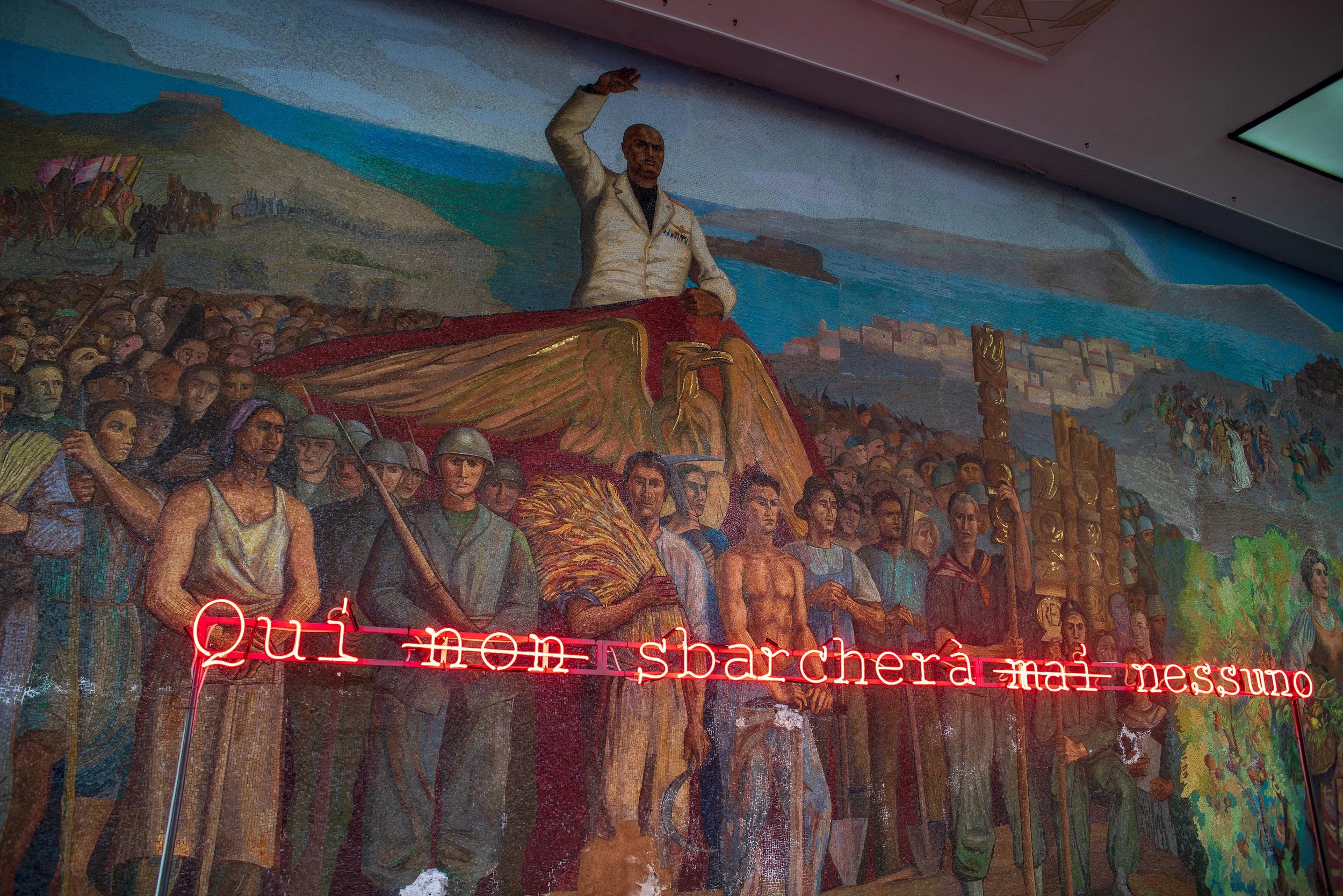
‘The Mosaic of the Empire’ by Michele and Basilio Cascella (1938) in the train station and ferry terminal in Messina, Sicily, overlaid in 2021 with Ninni Donato’s installation ‘Qui non sbarcherà mai nessuno.’ Photo copyright Ninni Donato.
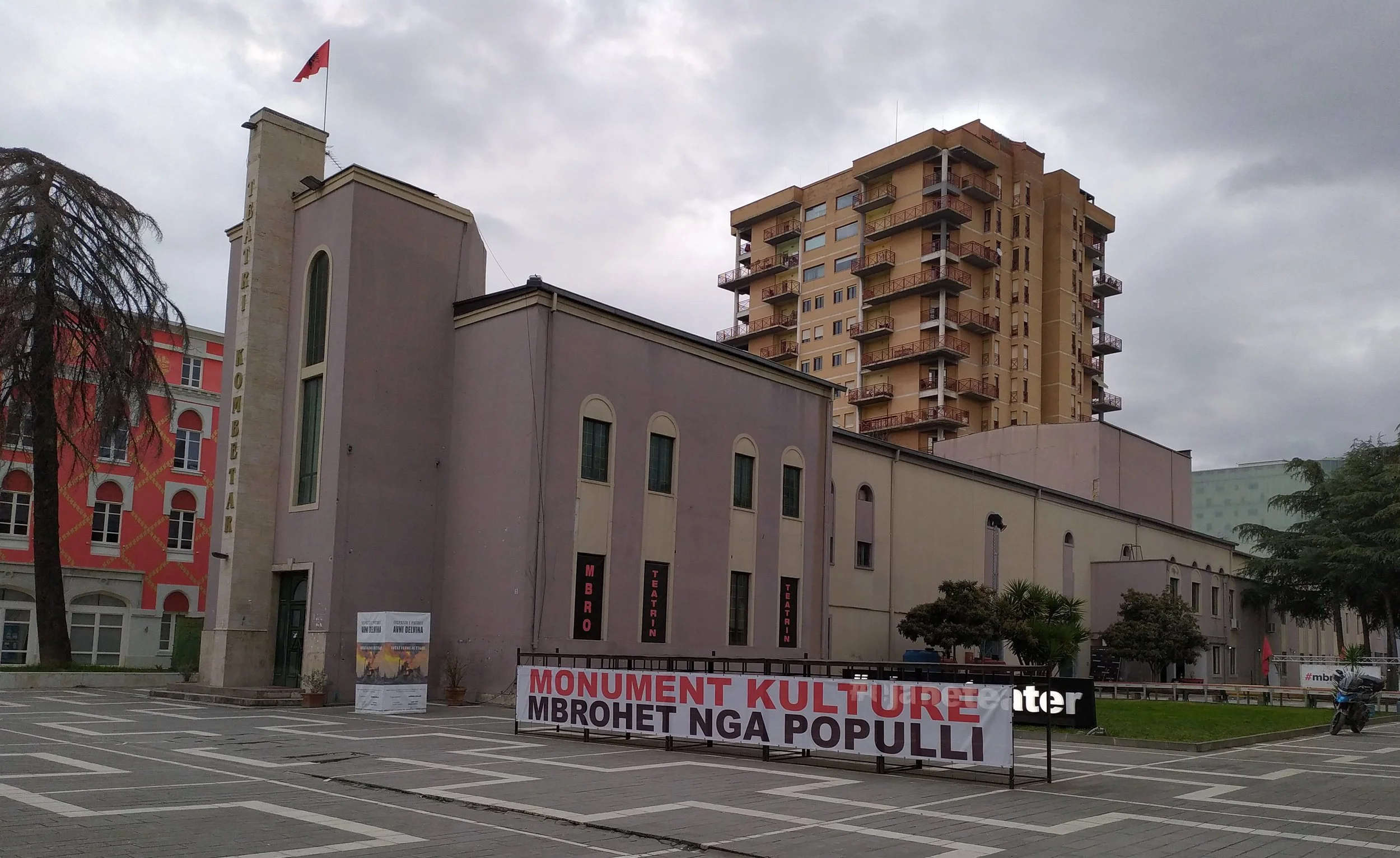
Banner protesting the planned demolition of the National Theatre of Albania in Tirana (built 1938) and destroyed in May 2020. Photo by By Leeturtle - Own work, CC BY-SA 4.0.